Tunisia has a varied climate, with Mediterranean conditions on the coast and hotter, drier weather toward the desert south. This guide helps you understand the seasons, choose the best time to travel, and prepare for changing temperatures between regions.
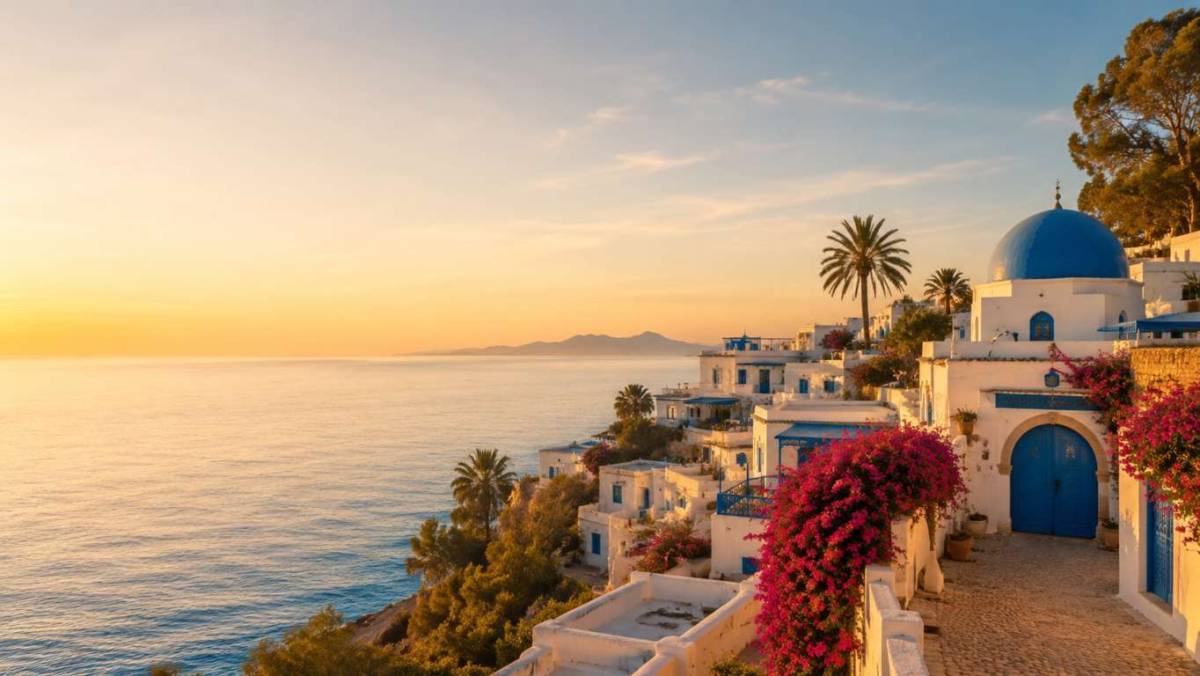
A jagged spit of land extending from the Mediterranean Sea into North Africa, sandwiched between Algeria and Libya, Tunisia is a popular package-tour destination offering hot, sunny beach holidays and excursions into the Sahara Desert.
Climate Overview
Most of the country enjoys a Mediterranean climate, which means the weather is hot and dry in summer, especially in July and August, and mild and damp in winter, especially in November, December, and January.
Tunisia’s temperatures range from a high of 32°C (90°F) in mid-summer to as low as 7°C (45°F) in January. Mediterranean beach resorts are most popular during the summer season, when the sea is lukewarm, the sun shines for up to 12 hours a day, and the sands are hot, with low humidity and very little rainfall.
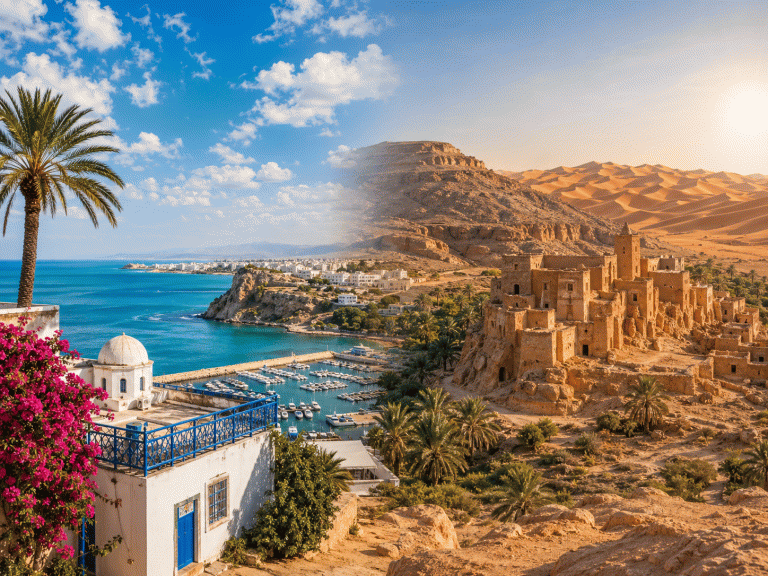
The mountainous north of the country gives way to a semi-arid plain, which merges into the Sahara Desert in the south. The desert south can be a no-go area for visitors in the summer months, when the heat can reach dangerous levels and the nights may become very cold.
The mountains help protect the coastal area from Saharan heat, so Tunisia’s Mediterranean resorts offer a pleasant temperate climate, cooled by sea breezes, and suitable for a beach holiday for a large part of the year.
Rain and Winter Weather
There can be heavy rain showers in the winter months. December and January are the wettest months, with around 70 mm of rainfall each and higher humidity.
Best Time to Visit Tunisia
If you enjoy a hot and lively holiday, the height of the summer season, July and August, is the time to enjoy the Tunisian coast. If that is too hot, choose the shoulder seasons of spring or autumn.
Spring, from March to May, is very warm and sunny, with the countryside carpeted with wild flowers. Autumn, from September to November, is just as pleasant, without the crowds and inflated prices of high summer. Late autumn is the best time for a desert experience.
What to Pack
What you pack for a holiday in Tunisia depends on the season and on your travel plans. In high summer, light beachwear may be enough in Mediterranean resorts, although in this Muslim country it is respectful to cover up appropriately when visiting local towns.
Loose, thin clothing is advisable during July and August. During spring and autumn, you may need jeans and a jumper for cool nights. In the winter months, especially November, December, and January, warmer clothing and a raincoat are necessary.