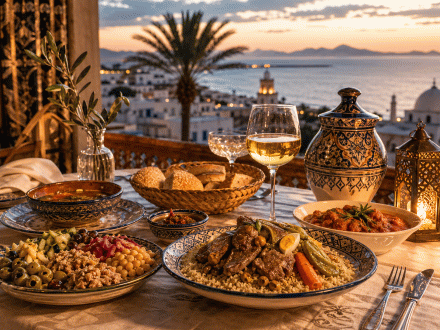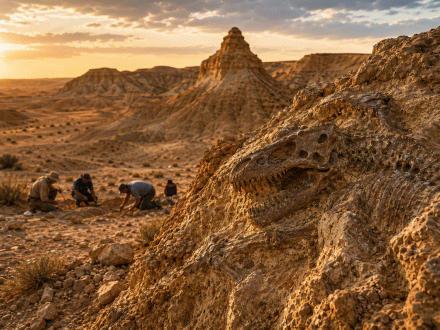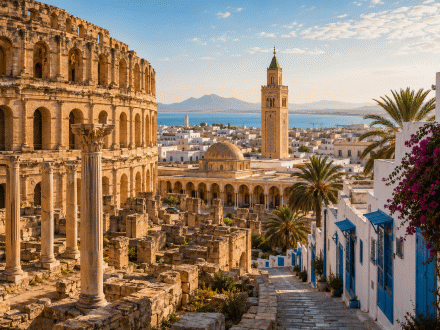
Tunisia offers beaches, medinas, Roman ruins, desert landscapes, oases, and welcoming towns within a compact and varied country. This article introduces the variety that makes Tunisia a rewarding destination for culture, relaxation, and exploration.
Tunisia is a place near yet surprisingly far, full of contrasts, where modernity and tradition travel hand in hand. It is an ideal destination for those who love exploring nature in its many forms or enjoying a week of relaxation.
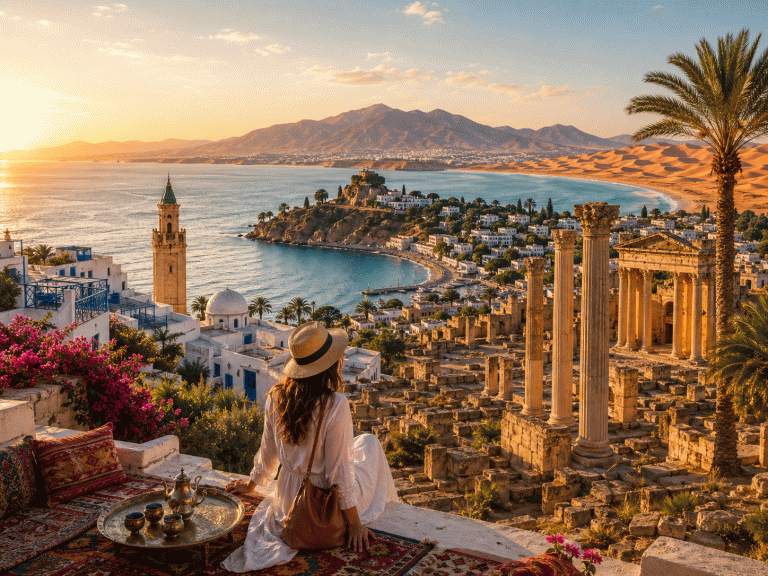
Despite its small size, Tunisia offers a variety of landscapes that can compete with much larger countries: lush green hills, lunar landscapes, palm groves, deserts, long sandy beaches, and the remains of ancient ruins.
Tunis, Carthage, and Sidi Bou Said
The capital city, Tunis, is the most important center of the nation. Its residential areas are modern, with government buildings and centers of power. The Medina offers a complete contrast, with narrow streets, old houses, traditional Arab markets, and the aroma of spices mixed with the calls of merchants. As in many Arab countries, haggling is part of the experience.
A few kilometers from the city center are the ruins of Carthage, directly overlooking the sea. Visitors can still admire the houses, ancient Roman baths, and places of worship. According to legend, Saints Perpetua and Felicitas, martyrs of African Christianity, were executed in the amphitheater of Carthage.
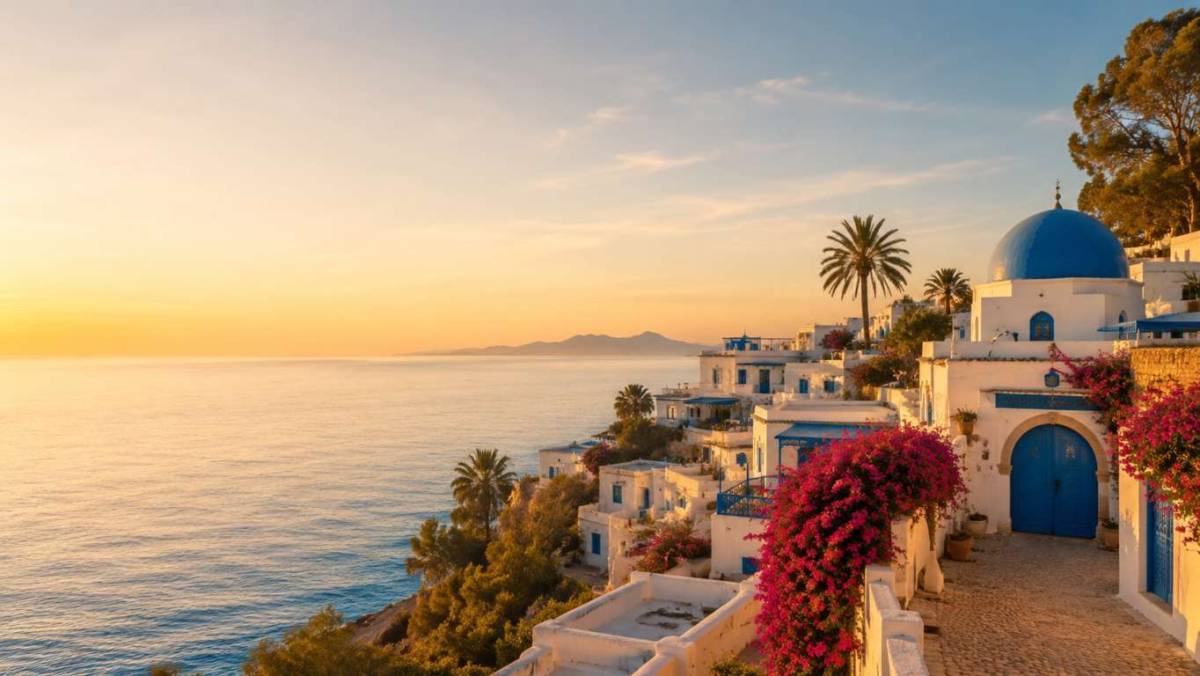
Not far away is the small village of Sidi Bou Said, known for its Mediterranean white buildings with blue windows, an architectural style also found in Greece and Andalusia. It is especially striking in the evening, when visitors can watch the sunset over the sea and enjoy narrow streets full of shops and cafes.
Coastal Resorts and Djerba
Further south, there are many tourist cities visited by Italian and Algerian travelers. The pearl of the Tunisian coast is Hammamet, which combines two identities: the ancient city, preserved for its authentic charm, and the modern city of Yasmine Hammamet, with hotel complexes, shops, and nightclubs.
Another popular resort is Djerba, a small island off the coast of southern Tunisia, not far from Libya. Known since ancient times and mentioned in the Odyssey, Djerba offers crystal-clear sea. The famous beach of Sidi Mahrez is one of the most beautiful in Tunisia.
Apart from the sea, Djerba is also known for colorful pottery and rugs exported around the world. Rich in history, the island includes one of the oldest Jewish synagogues in the world and the Roman bridge built to connect Djerba to the mainland.
Roman Sites and the South
Another symbol of Roman rule in Tunisia is the amphitheater of El Jem, which inspired comparisons with the Colosseum. The Roman ruins of Dougga, 105 km southwest of Tunis, are considered among the most spectacular and best preserved in Tunisia.
Tunisia has three types of desert: rock, salt, and the vast expanse of sand that is the Sahara. One of the most popular places is Matmata, a troglodyte village where Berbers, the original inhabitants of the area, live in underground houses cut into the rock. Visitors can even stay in a hotel carved into the stone, with a central courtyard and rooms all around, once used as multifamily residences.
In the isolated south lies the Gulf of Gabes, especially attractive to tourists. Its lunar landscape was used as a film setting for George Lucas’s Star Wars.
Chott El Jerid, Douz, and Tozeur
A rare beauty can be found in the salt lake of Chott El Jerid, which becomes a vast expanse of water in winter and a huge salt desert in summer. Minerals give the salt crystals red, blue, and green hues, creating a striking effect.
Nearby is Douz, the gateway town to the Sahara, opening onto a vast expanse of sand. Here the sand is golden and has the texture of powder. The area offers the possibility of camel rides into the dunes. The best time for a camel ride is in the evening, with the backdrop of an unforgettable desert sunset.
When the sun sets, everything is tinged with shades of red. A night in the desert, away from city lights and noise, makes it possible to admire stars that would otherwise remain invisible.
The journey continues to Tozeur and its oases. The city is one of the most important in southern Tunisia and allows visitors to see a different side of the country, away from 5-star hotels and closer to everyday life, hard work, and local traditions.
It is surprising to find one of the lushest green oases of the country only a few kilometers from the Sahara. The oasis of Tozeur has one of the highest concentrations of date production in the world. The mountain oases, accessible by jeep through trails and dirt roads, are truly enchanting places. The most visited are Chebika and Tamerza, rich in vegetation and water near the Algerian border.
Going north, travelers arrive in Kairouan, the fourth holiest city of Islam and home to one of the most imposing monuments in North Africa.