
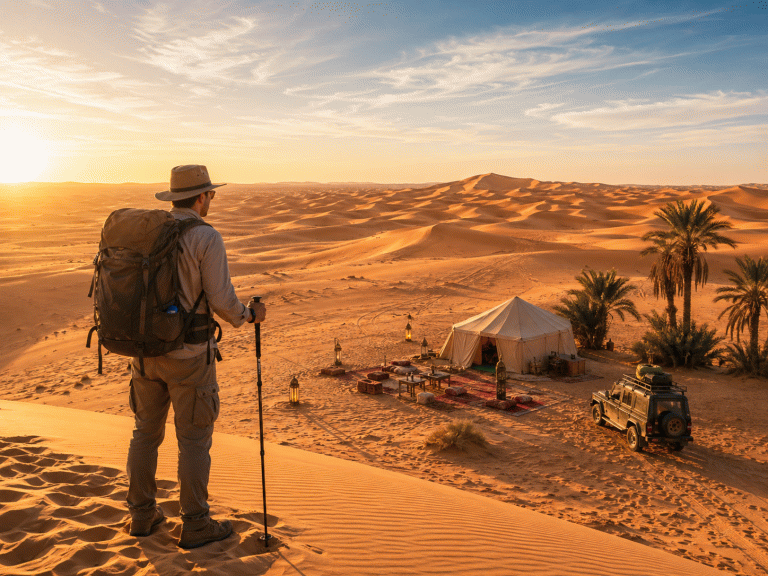
The Tunisian Sahara is unforgettable, but it requires good preparation, the right clothing, enough water, and local guidance. These practical tips help you enjoy the desert safely, whether you are traveling by private vehicle, coach, or camel.
Whether you are traveling by car, coach, or camel, it is important to be aware of the desert’s dangers so that safety precautions can be taken. These tips can help you enjoy an unforgettable experience in the Tunisian desert.
Water and Temperature
The most important elements to consider in the desert are water and temperature. During summer, especially July and August, the Tunisian desert becomes very hot. Wear appropriate clothing and choose light colors, because darker colors absorb more heat.
Drink plenty of water to avoid dehydration. Use comfortable walking shoes or hiking boots, and wear a hat and long scarf. Tunisians leave one end of the scarf hanging down to protect the back of the neck.
Cold Nights
The temperature drops dramatically after dark, and nights can become very cold, especially in winter, from January to February. Bring something warm if you plan to spend time in the desert after sunset.
Guidance and Vehicle Safety
Do not venture onto desert tracks without a local guide and proper equipment. If you have decided to discover the Tunisian south, make sure your vehicle is in good condition and consider the distance between petrol stations. Fill the tank as soon as it is half empty, and take plenty of water.
A second vehicle does not replace an experienced local guide. Agree the route, vehicle support and communications plan with your guide before departure. Inform local authorities before starting your desert journey.
Orientation in the Desert
The sun can help indicate east and west in the desert. Local nomads use distant landmarks, such as rock formations and cliffs, as reference points. A distant landmark behind them helps confirm that they are moving in the right direction.
Driving at Night
Avoid driving at night. There are no lights, no road signs, and no white lines to guide you. Drive slowly and watch out for other vehicles, people, and dromedaries crossing the road.
Ask Tunisia Horizon
For current road and regional travel advice, check FCDO safety guidance and regional restrictions before travel, together with the advice issued by your own authorities. Conditions can change.